Effective Competitor Tracking Methods
Summary
In the rapidly evolving world of SaaS, staying ahead of the competition is not just advantageous but crucial. The ability to monitor and analyze competitors’ activities can provide invaluable insights, allowing founders, marketers, and product teams to seize opportunities that might otherwise be missed. Here, we explore effective competitor tracking methods that can enhance your growth strategies and solidify your market position.
Table of Contents
- Understanding the Importance of Competitor Tracking
- Effective Competitor Tracking Methods
- Comparison of Competitor Tracking Strategies
- Turning Insights into Actionable Strategies
- The Role of Tools in Competitor Tracking
- Conclusion & Call to Action
Competitor tracking goes beyond merely observing rival companies; it encompasses understanding the landscape in which you operate. This strategy positions you to swiftly respond to market dynamics, refine your messaging, and uncover high-intent opportunities that can drive growth. By implementing the right tracking methods, you can transform data into actionable insights, empowering your business to make informed decisions.
Featured Cover: Effective Competitor Tracking Methods
- Rapid Response to Market Changes
Competitor tracking enables organizations to respond swiftly to shifts in pricing, product features, and consumer demands. This agility not only helps you keep pace but also strengthens your competitive edge.
<iframe class="w-full h-full" src="https://www.youtube.com/embed/xaIeoPtHnuY" title="YouTube video player" frameborder="0" allow="accelerometer; autoplay; clipboard-write; encrypted-media; gyroscope; picture-in-picture; web-share" allowfullscreen></iframe>
Understanding the Importance of Competitor Tracking
Key Benefits of Competitor Tracking
- Identifying Opportunities
Monitoring competitors reveals insights into customer preferences and market trends. By examining competitors' customer interactions and product strategies, you can uncover gaps in the market and develop solutions that meet unfulfilled needs. - Enhancing Customer Engagement
Understanding how competitors connect with customers can highlight effective practices. Tracking customer sentiments on social media, reviews, and discussion forums helps you gauge consumer perception of your competitor's offerings. - Actionable Insights Over Raw Data
Effective methods transform raw metrics into clear insights. This approach prevents data overload that can complicate strategic decision-making, instead providing actionable recommendations guided by AI, ensuring clarity and focus in your growth initiatives.
Effective Competitor Tracking Methods
1. Market Signal Monitoring
One of the most effective ways to track competitors is through market signal monitoring. Tools like Growlytics aid in capturing buying signals and brand mentions across over 140 channels, including Reddit, LinkedIn, and Twitter. Here’s why this method is powerful:
- Comprehensive Coverage: Monitoring multiple channels enables businesses to gain insights from diverse audience segments. This holistic view of market sentiment enhances your understanding of prevailing trends.
- AI-Powered Recommendations: Leveraging AI, platforms can summarize and interpret key market signals, allowing for timely strategic decisions. For example, if AI detects a spike in positive mentions regarding a competitor's new feature, companies can assess whether a similar enhancement would be beneficial.
2. Competitive Pricing Analysis
Pricing dynamics can significantly influence success. Implementing competitor pricing analysis enables you to track changes in competitor pricing and promotions effectively. Here’s how to maximize this method:
- Real-Time Alerts: Establish alerts for competitor price adjustments to respond promptly. If a competitor reduces their prices, understanding the context—like limited-time discounts for a new product launch—can inform your strategy.
- Market Comparison: Develop a pricing matrix to benchmark your offerings against competitors. Utilize insights from your tracking to ensure your pricing remains competitive without compromising your value proposition.
3. Social Media Monitoring
Social media serves as a rich source of insights straight from customers, offering a direct perspective on competitor engagement with their audience. This method includes:
- Sentiment Analysis: Tools can evaluate the sentiment surrounding competitor brands. If a significant number of users express dissatisfaction with a rival’s customer service, this insight becomes invaluable. You can leverage this as a compelling selling point for your product.
- High-Intent Engagements: Identify high-intent discussions about competitors. Monitoring social media interactions provides valuable data on customer pain points that you can address in your offerings.
4. Review and Blog Tracking
Blogs and reviews yield qualitative insights into customer preferences. Monitoring competitor blogs and product reviews can reveal:
- Product Strengths and Weaknesses: Analyze feedback on competitors’ products to discern which features customers value or criticize. This information can guide your product development or marketing strategies.
- Content Strategy Insights: Observe the content types competitors promote. Are they focusing on thought leadership, or are they amplifying user-generated content? Adopting successful content strategies while preserving your unique voice can prove beneficial.
5. Leveraging AI and Automation
Automation tools ease the manual workload associated with competitor tracking. Organizations can utilize these tools to:
- Streamline Data Collection: Automatically gather insights from multiple platforms without manual searching, eliminating bottlenecks in your decision-making processes.
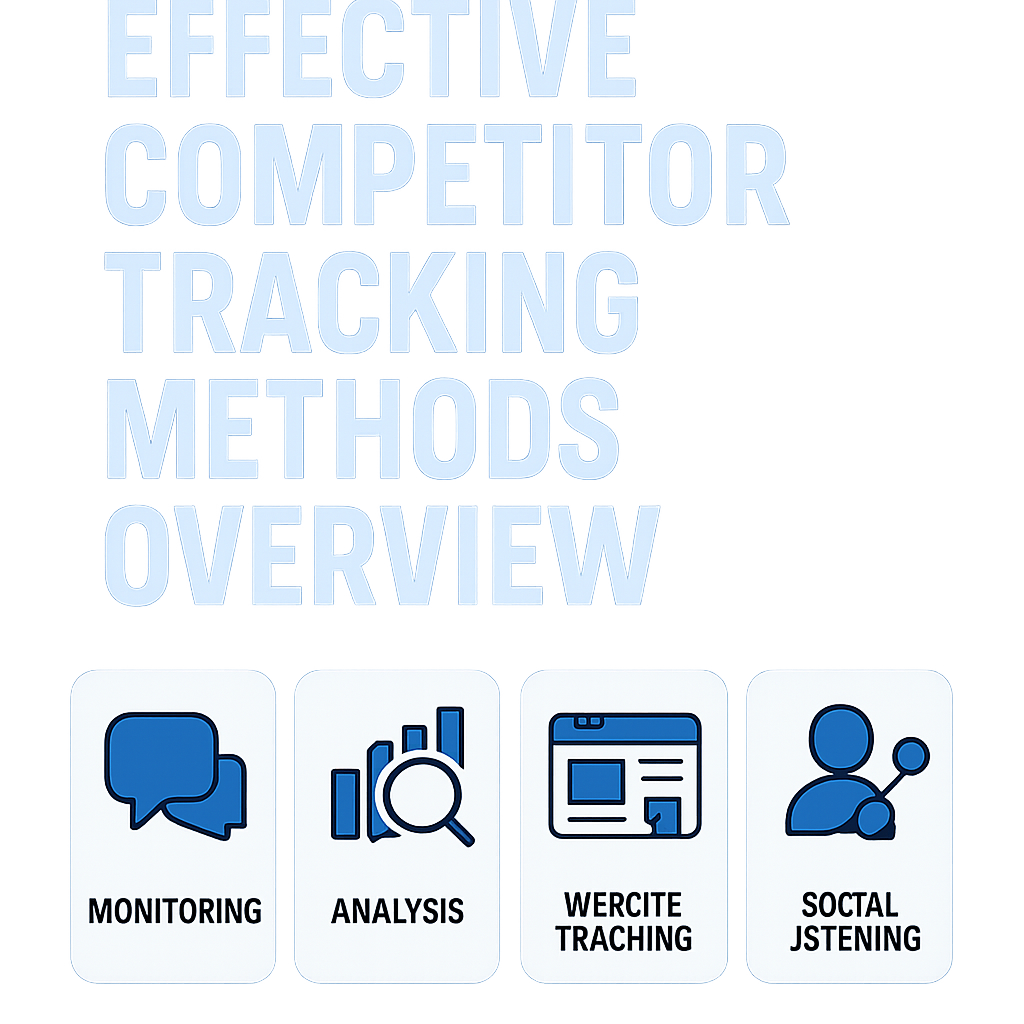
Contextual representation of effective competitor tracking methods
- Create Dynamic Reports: Automating report generation allows your team to focus on analysis rather than data collection. This boosts productivity and responsiveness to emerging trends.
Comparison of Competitor Tracking Strategies
To better illustrate the pros and cons of different methods, here’s a breakdown in table format:
| Tracking Method | Pros | Cons | Best For |
|---|---|---|---|
| Market Signal Monitoring | Comprehensive insights, real-time data | Can lead to data overload | Founders needing strategic foresight |
| Competitive Pricing Analysis | Ability to adjust pricing dynamically | Requires constant updates and monitoring | Marketers tracking pricing strategies |
| Social Media Monitoring | Direct customer feedback, sentiment analysis | Requires timely engagement and response | Brands aiming to improve customer relations |
| Review and Blog Tracking | Qualitative insights, content inspiration | Time-consuming to scour and analyze | Product teams focusing on enhancements |
| AI and Automation | Increases efficiency, reduces manual effort | Requires initial setup and integrations | Teams needing scalable tracking solutions |
Turning Insights into Actionable Strategies
The true value of competitor tracking lies not only in gathering insights but in applying them effectively. Here’s how to turn these insights into actionable strategies:
Develop Responsive Action Plans
For every market shift or competitor action identified, construct a corresponding action plan. If a competitor releases a new feature, consider:
- What’s our short-term response? Plan a promotional campaign that highlights your existing features in comparison to theirs.
- Long-term adjustments? Determine whether you need to develop similar features or emphasize different aspects of your product to distinguish it.
Optimize Messaging Based on Trends
Insights from competitor activities and market discussions can refine your tone and messaging. Follow these steps:
- Identify Key Themes: Track trending topics in your industry through competitor analysis.
- Align Messaging: Ensure that your marketing materials (ads, website, emails) resonate with customer sentiments and directly address their pain points. Emphasizing customer-centric messaging could attract users dissatisfied with competitors.
Continuous Experimentation
Fostering a culture of experimentation is essential. Utilizing no-code tools, teams can launch rapid tests on landing pages and messaging:
- Test Variations: Experiment with different messages or pricing strategies to see which variations yield better conversion rates.
- Learn and Adapt: Harness feedback from these tests to inform your next steps, ensuring continuous adaptation to market conditions.
The Role of Tools in Competitor Tracking
The right tools significantly enhance your tracking efforts. Solutions like Growlytics can automate many tracking processes:
- Centralized Dashboard: Provides a single view of all monitoring activities, simplifying decision-making.
- AI-Powered Insights: Offers clear, actionable recommendations based on collected data, making it easier to take necessary actions.
When selecting tools, consider scalability, ease of use, and your team’s specific needs. You want a user-friendly platform that simplifies tasks rather than one that complicates processes for your small team.
Conclusion & Call to Action
Competitor tracking is a vital strategy for anyone looking to succeed in the competitive SaaS arena. By employing effective methods such as market signal monitoring and social media tracking, you can convert insights into strategic actions that propel growth.
Are you ready to elevate your competitor tracking approach? Explore Growlytics - AI-Powered Growth Command Center for tools and insights designed to empower your business. Enhance your ability to stay ahead of the curve and seize opportunities before they pass you by!
For additional resources, don’t forget to visit our Pricing page, which outlines various solutions available to meet your tracking needs.
Harness the transformative power of effective competitor tracking and witness your business flourish!